

What Is R2v3? ITAD Certification & Buyer Checklist
Published by TD Team on
21 July 2022
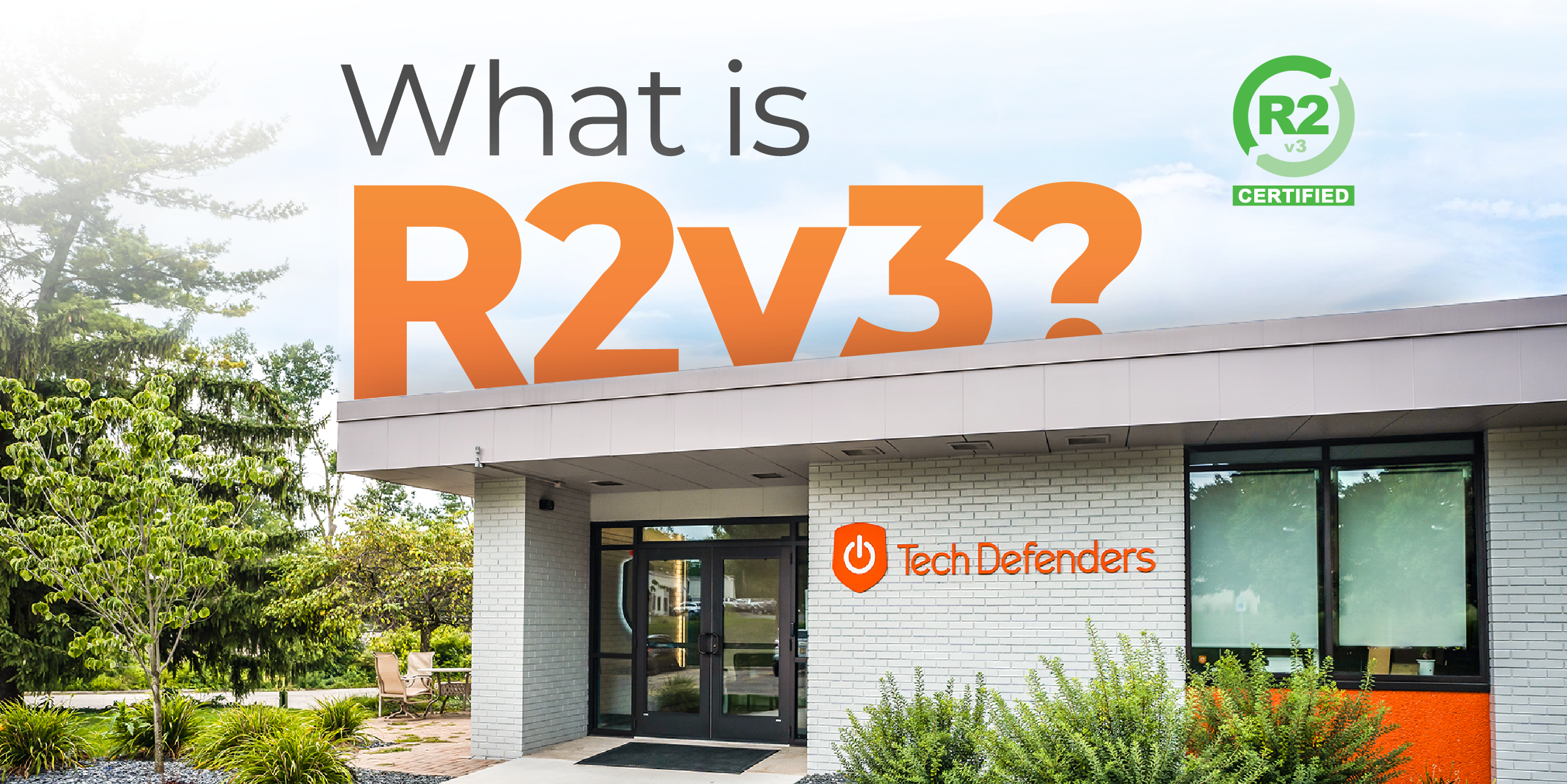
Last week, Tech Defenders passed a major milestone and was given the official certification for R2v3 from SERI. So what exactly is the R2v3 certification and why is it important to you as a partner of Tech Defenders? Stay with us and we'll answer all of these questions and more.
What is the R2v3 certification?
The R2v3 certification stands for Responsible Recycling. Originally created with guidance from the Environmental Protection Agency (EPA), it is the global certification standard for the IT asset disposition (ITAD) industry. R2’s standards emphasize reusing and recycling over just managing electronic waste, with the goal of facilitating a truly circular lifecycle for IT equipment.
Why is it important?
Receiving this certification requires a rigorous set of standards to be consistently met. Both the warehouse staff that handles hazardous materials and the compliance team that is responsible for documenting the processes are required to maintain complete compliance. All the requirements to receive an R2v3 certification are put in place to protect people handling the equipment, reduce the amount of impact on the environment, keep data secure, and preserve resources in the disposal of IT waste.
What does this certification mean to you?
In a few words - peace of mind. The R2v3 certification signifies that we have gone above and beyond to ensure any data that ever existed on any device you sell to us is processed properly and that if your retired technology is ever recycled, it will be recycled in the safest, most environmentally friendly way.
“Obtaining this R2v3 certification is a big step towards maintaining our overall goal of making technology affordable and keeping it out of landfills. This certification strengthens our commitment to that goal as well as demonstrates to our clientele that we stick to the core principles our business was built on. Our team has done a fantastic job preparing for this and I’m so proud of how quickly we’ve all adapted to the new regulations SERI has implemented.”
- Garry VonMyhr, CEO and Co-Founder of Tech Defenders
Why did we get these certifications?
Considering the sensitivity around private information and the negative effect that e-waste has on our environment, it was important to us to certify our process. Obtaining the R2v3 certification was a long and tedious process, including an extensive audit of our facility. The end result allows us to provide transparency to our clients looking to identify and control their environmental impact and ensure the security of their data or hardware once it leaves our facility.
| Benefit | R2v3 Certified | Not R2v3 Certified |
| Guaranteed Data Integrity | ✔ | ✘ |
| Brand Protection | ✔ | ✘ |
| Tracking Throughput | ✔ | ✘ |
| Recycling Accountability | ✔ | ✘ |
| Certified Third-Party Review | ✔ | ✘ |
| Minimized Environmental Risk | ✔ | ✘ |
Benefits of the R2v3 Certification:
- Promotes safe and effective reuse and recovery of electronic equipment and components
- Emphasizes data security and the appropriate management of personal data
- Provides a template for standardized labeling, testing protocols, and grading of both functionality and cosmetic condition of used electronics with reuse potential or a verified resale market
- Accountability and downstream control of the recycling chain
- Minimized environmental and public health risks
- Demonstrates compliance with domestic and international laws
- Minimizes liability and encourages reduced insurance costs for recyclers
- Instills public confidence through certified third-party review
Why should your ITAD partner have it?
The R2v3 certification will ensure that your IT equipment is properly handled, especially when it comes to assets with sensitive data. For an ITAD company to maintain their certification, they are required to have extensive yearly audits. These audits require review of warehouse operations, proper documentation, and proof of exactly where your recycled equipment is being distributed. Make sure your ITAD partner is certified in R2 and moving towards getting certified for R2v3.
Learn more about the R2v3 standard and how it can benefit you by visiting the Sustainable Electronics Recycling International (SERI) website.
What R2v3 Should Mean When Choosing an ITAD Partner
R2v3 certification is most valuable when it shows up in the day-to-day details of an IT asset disposition program. For an organization retiring laptops, tablets, desktops, servers, or other data-bearing equipment, the question is not only whether a provider has the certification. The better question is how that provider applies R2v3 principles to data security, reuse, recycling, documentation, and downstream accountability.
That is why R2v3 matters for both enterprise ITAD and IT asset recovery services. A strong program should help your team protect data, recover value from reusable assets, and document what happened after equipment left your control.
R2v3 Buyer Checklist
| What to Ask | Why It Matters |
|---|---|
| Can you document asset intake by serial number or asset tag? | Serialized tracking helps prove which assets were received, processed, recovered, or recycled. |
| How is data sanitized, destroyed, and reported? | Data-bearing assets should have a documented process that supports internal audit and compliance review. |
| How are reusable assets separated from end-of-life assets? | A recovery-first process can preserve resale value before recycling is considered. |
| Can you explain downstream recycling controls? | Responsible disposition should account for where materials go after they leave the first facility. |
| What final reports will our team receive? | Finance, IT, security, and compliance teams need clear records for reconciliation and proof of disposition. |
R2v3 Is Not Just a Recycling Claim
One common mistake is treating R2v3 as if it only applies to recycling. Recycling is part of the picture, but R2v3 is also relevant to reuse, repair, testing, data security, documentation, environmental controls, and downstream management. In practical terms, that means a certified ITAD partner should be able to show how retired assets move through a controlled workflow before final disposition.
If your organization is comparing providers, look beyond the logo. Ask how assets are received, how data is handled, how reuse value is evaluated, and how your team will receive proof. Helpful supporting documents may include an ITAD chain of custody, a certificate of data destruction, and an ITAD audit trail.
How R2v3 Supports Better Asset Recovery
A strong ITAD process should not send every retired device straight to recycling. Many assets still have useful life and recoverable value. When devices can be securely sanitized, tested, graded, and remarketed, organizations may reduce waste while improving the financial return from refresh projects.
That is where R2v3 and asset recovery work together. R2v3 helps set expectations for responsible handling, while a disciplined recovery process helps determine which assets can be reused, which require repair or parts recovery, and which should move to responsible recycling.
Quick Answer: Why Should Your ITAD Partner Be R2v3 Certified?
Your ITAD partner should be R2v3 certified because retired technology often contains sensitive data, reusable components, environmental risk, and audit obligations. R2v3 certification gives buyers a stronger framework for responsible reuse, recycling, documentation, and downstream accountability than a simple disposal or recycling pickup.
Need an ITAD partner with documented controls? Tech Defenders supports organizations with certified, transparent asset disposition workflows built around secure handling, recovery value, and clear reporting. Learn more about our enterprise ITAD services or our IT asset recovery services.