

What is ITAD?
Published by TD Team on
22 May 2020
Updated September 27, 2026
IT asset disposition (ITAD) is the process of retiring technology while protecting the data it contains and deciding whether equipment should be reused, resold, recycled or destroyed. It combines asset tracking, data sanitization or destruction, value recovery, responsible recycling and documentation.
Organizations looking for help with retired equipment can explore Tech Defenders' ITAD services, including data destruction, asset recovery, recycling and logistics.
Why does ITAD matter?
A retired laptop, server or phone can still contain sensitive information. It may also have resale value or contain materials that need responsible handling. An ITAD program brings those decisions together so equipment does not leave the organization without a plan for its data, ownership and final destination.
For schools, businesses and other organizations, the goal is to protect information, recover value where possible and keep records that show what happened to each asset. Recycling alone does not answer every question about data handling, resale or documentation.
What does the process include?
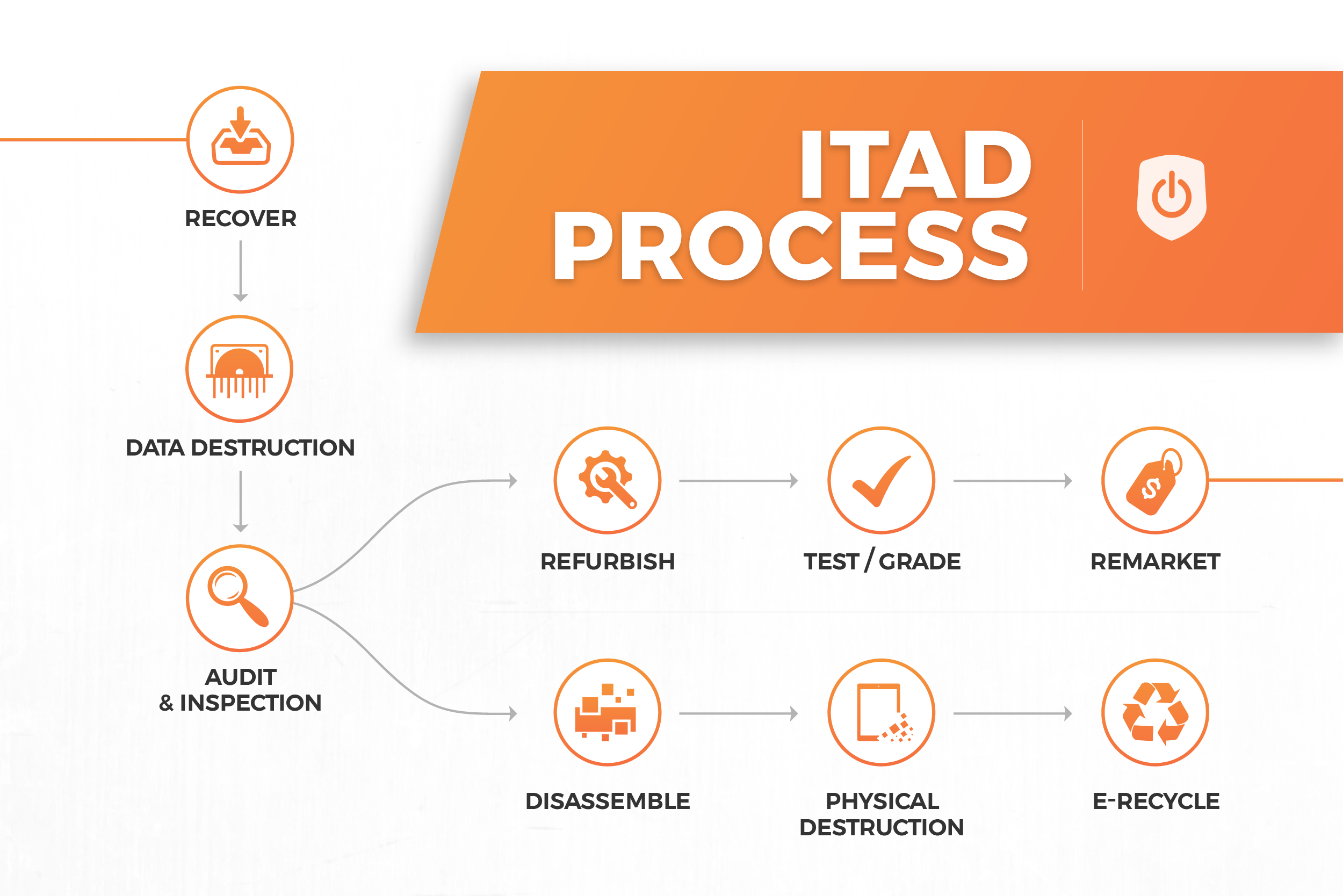
- Inventory and planning. Identify the devices, locations, owners and data requirements. Record asset tags or serial numbers, resolve account locks and agree on pickup arrangements before equipment leaves your control.
- Collection and chain of custody. Document who handles the assets and when custody changes. An ITAD chain of custody connects pickup, transport, receipt and processing records.
- Data sanitization or destruction. Select an appropriate method for the media, its condition and the organization's requirements. Deleting files or formatting a device is not the same as a verified sanitization process. Failed wipes and other exceptions need a documented resolution.
- Evaluation and disposition. Assess whether equipment can be reused, refurbished or resold. Equipment without a suitable reuse path may need recycling or physical destruction. IT asset recovery services focus on evaluating and recovering value from eligible retired equipment.
- Reporting and closeout. Reconcile the original inventory with the final outcomes. Keep the applicable sanitization or destruction records, disposition reports and financial records together.
How is ITAD different from ITAM and electronics recycling?
IT asset management (ITAM) covers how an organization tracks and manages technology throughout its working life. ITAD focuses on what happens when assets are retired or transferred out of use. A clear handoff between those processes helps teams reconcile inventory and data responsibilities. Our ITAD vs. ITAM guide explains that distinction.
Electronics recycling is one possible outcome within ITAD. The broader program also considers data security, reuse, resale, transportation and reporting. A working device may have a reuse path; a failed storage device may require a different treatment.
What should you receive from a provider?
Agree on the documentation before pickup. Depending on the project, useful records include:
- An inventory with device identifiers and any discrepancies.
- Custody records covering collection, transport and receipt.
- Data sanitization or destruction results, including exceptions and their resolution.
- Final disposition outcomes and a record of any recovered value or service charges.
A certificate is one part of that record. It should be possible to connect the relevant data-handling result to the assets covered, rather than relying on a general statement that a shipment was processed.
How do you choose an ITAD company?
Ask for current certification details and confirm the facility and activities covered. R2v3 certification is relevant to evaluating reuse and recycling practices, but a logo alone does not establish the scope of a particular engagement. Review sample documentation and agree on responsibilities in writing.
Before selecting a provider, ask:
- Which equipment and pickup locations can you support?
- How will data-bearing devices be handled, and what happens if a device cannot be wiped?
- How are missing, locked or damaged devices reported?
- What records will we receive, and when?
- How are resale proceeds, processing costs and payment terms determined?
Organizations coordinating multiple sites or formal reporting requirements can review Tech Defenders' enterprise ITAD program for more detail.
Will retired devices generate a payout?
Some equipment retains resale value, but a payout is not guaranteed for every device or project. Age, condition, specifications, account locks and market demand affect value. Collection, processing, recycling or destruction may involve charges. Confirm the valuation method, deductions and payment schedule in the proposal.
Plan retirement around operational needs and the provider's agreed schedule. Processing and payment timelines vary; there is no single turnaround that applies to every ITAD engagement.
Build the plan before the next refresh
Start with an equipment inventory, your data-handling requirements, pickup locations and a target schedule. Agree on the reporting and financial terms before releasing assets. To discuss your organization's retired equipment, request a quote from Tech Defenders.